Southwestern-style rugs and kilims: how to tell what you are buying, and how to care for it
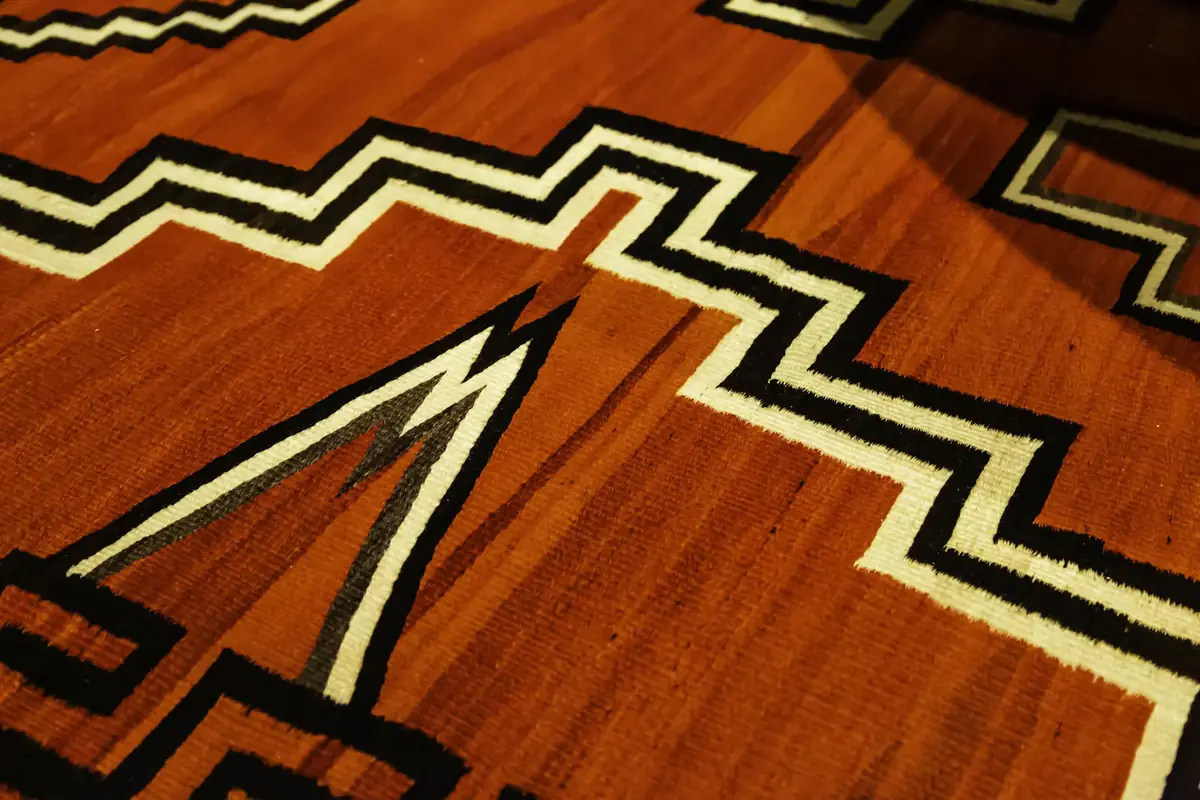
Bold geometric rugs in red, cream, black and indigo suit almost any room, from a rented flat to a cabin. Under the label "Southwestern" or "tribal", though, shops sell very different things: hand-woven kilims from Turkey, Iran or Central Asia, Native American weavings, Mexican Zapotec rugs and machine-made prints. Knowing which is which helps you pay a fair price and care for the rug properly.
Flatweave versus pile
Rugs are made in two broad ways:
- Pile rugs have tufts of yarn knotted or tufted into a backing, standing up to form a soft surface. Most "Persian" and "oriental" carpets are pile rugs.
- Flatweaves have no pile. The pattern is made by the weft threads themselves as they are woven over and under the warp. They are thinner, lighter and usually reversible.
The rugs people usually mean by "Southwestern style" are flatweaves. They are easier to move, roll and clean than pile rugs, and they suit busy rooms and rented homes well.
The main families
| Name | What it usually means | Typical look |
|---|---|---|
| Kilim | Flatwoven rugs from a wide region including Turkey, the Caucasus, Iran, Afghanistan and Central Asia | Geometric motifs, diamonds and stepped shapes; often small slits where two colours meet |
| Navajo (Diné) weaving | Hand-woven textiles made by Navajo weavers in the American Southwest | Bold geometry, terraced shapes, natural and dyed wool colours |
| Zapotec rug | Flatwoven wool rugs made in Oaxaca, Mexico, especially around Teotitlán del Valle | Geometric patterns, often with natural dyes |
| Dhurrie | Flatwoven cotton or wool rugs from India | Stripes and simple geometrics; thick and sturdy |
| "Southwestern" or "Aztec" print | A style label, usually on machine-made rugs | Similar motifs, printed or power-loomed |
Names describe tradition and origin, not quality. There are excellent and poor rugs in every group.
How to tell hand-woven from machine-made
- Turn it over. In a hand-woven flatweave the back shows essentially the same pattern as the front, often with some loose weft ends. A printed rug has a pale or plain back; a tufted rug has a fabric or latex backing glued on.
- Look at the edges. Hand-woven rugs have side edges (selvedges) wrapped with the weaving yarn, and they are rarely perfectly straight. Machine-made rugs have very uniform, often overlocked edges.
- Look at the fringe. On a hand-woven rug the fringe is the warp threads themselves, continuing out of the body of the rug. A fringe sewn or glued onto the end is a sign of machine production.
- Look for small irregularities. Slight variations in a motif's size, a colour that changes subtly across the rug ("abrash", from different dye batches), a pattern that is not perfectly symmetrical. These are normal in handwork and rare in machine-made rugs.
- Check the fibre. Wool feels springy and slightly oily; acrylic and polypropylene feel slick or plasticky.
"Native-made" claims and the law
In the United States, the Indian Arts and Crafts Act of 1990 is a truth-in-advertising law: it is illegal to offer or sell an art or craft product in a way that falsely suggests it was made by an American Indian or by members of a particular tribe. "Navajo style" or "Southwestern" on a label is therefore not a claim of Native origin. If a seller says a rug is a Navajo weaving, ask who made it and how they know; reputable dealers and trading posts can usually say. The U.S. Department of the Interior's Indian Arts and Crafts Board, which administers the law, accepts complaints about possible misrepresentation.
Many Native weavers and cooperatives sell directly, and buying from them, or from galleries that name the weaver, is the surest way to know where your money goes.
Buying secondhand
Thrift stores, estate sales and flea markets are good places to find flatweaves. Check:
- Moth damage: bare patches or small holes, especially in areas that were under furniture.
- Colour run: blurred edges where a dark colour has bled into white areas usually means it got wet. Blot a damp white cloth on a dark area: if colour comes off, avoid washing it at home.
- Edges and ends: worn or unravelling selvedges and fringes can be repaired, but a professional repair costs money.
- Smell: mustiness can mean mildew, which weakens fibres.
- Flatness: a rug that will not lie flat or has wavy edges may have been woven unevenly or stretched; a rug pad helps somewhat.
For more on inspecting used finds, see the guide to buying vintage and secondhand.
Everyday care
- Use a rug pad. Flatweaves are light and slide easily. A non-slip pad under the rug prevents trips and reduces wear.
- Vacuum gently. Use suction only, or turn off the rotating brush, and vacuum along the direction of the warp, not over the fringe. Brush rolls can catch and pull the weave and the fringe.
- Shake it out. Small rugs can be shaken outdoors; never hold a rug by its fringe to do it.
- Rotate it every few months so wear and sun fading are even.
- Limit direct sun. Strong sunlight fades dyes over time. Blinds or curtains help.
- Air it. Occasionally lay the rug face down in the shade outdoors on a dry day.
Spills and cleaning
- Act quickly. Blot, do not rub, with a clean white cloth or paper towels, working from the outside of the spill inwards.
- For water-based spills, blot with a little cool water, then blot dry. Avoid soaking the rug.
- Test any cleaning product on a hidden corner first; many dyes in older or naturally dyed rugs are not colourfast.
- Dry the area flat with good airflow, and raise it on something so air can reach the back.
For a full clean, especially of an older, valuable or hand-woven rug, use a cleaner who specialises in hand-woven rugs. Home carpet shampooers and steam cleaners can make dyes run and shrink wool unevenly.
Storing a rug
Clean the rug and make sure it is completely dry. Roll it, never fold it, with the face inwards, around a tube if you have one. Wrap it in breathable cotton fabric or paper rather than sealed plastic, which traps moisture. Store it off the floor in a dry place, and check it for moths a couple of times a year. Freezing small textiles in a sealed bag for several days is a common way to deal with suspected moth larvae; see cleaning and mending secondhand textiles.
Styling a bold rug
- Pick one or two colours from the rug and repeat them in cushions or a throw.
- Keep other patterns in the room smaller and quieter so the rug leads.
- A flatweave over a larger plain jute or sisal rug adds texture and makes a small rug go further.
- Hang a small kilim on the wall as a textile piece, using a sleeve sewn on the back and a rod, not nails through the weave.