First home on a small budget: a practical guide to buying or setting one up
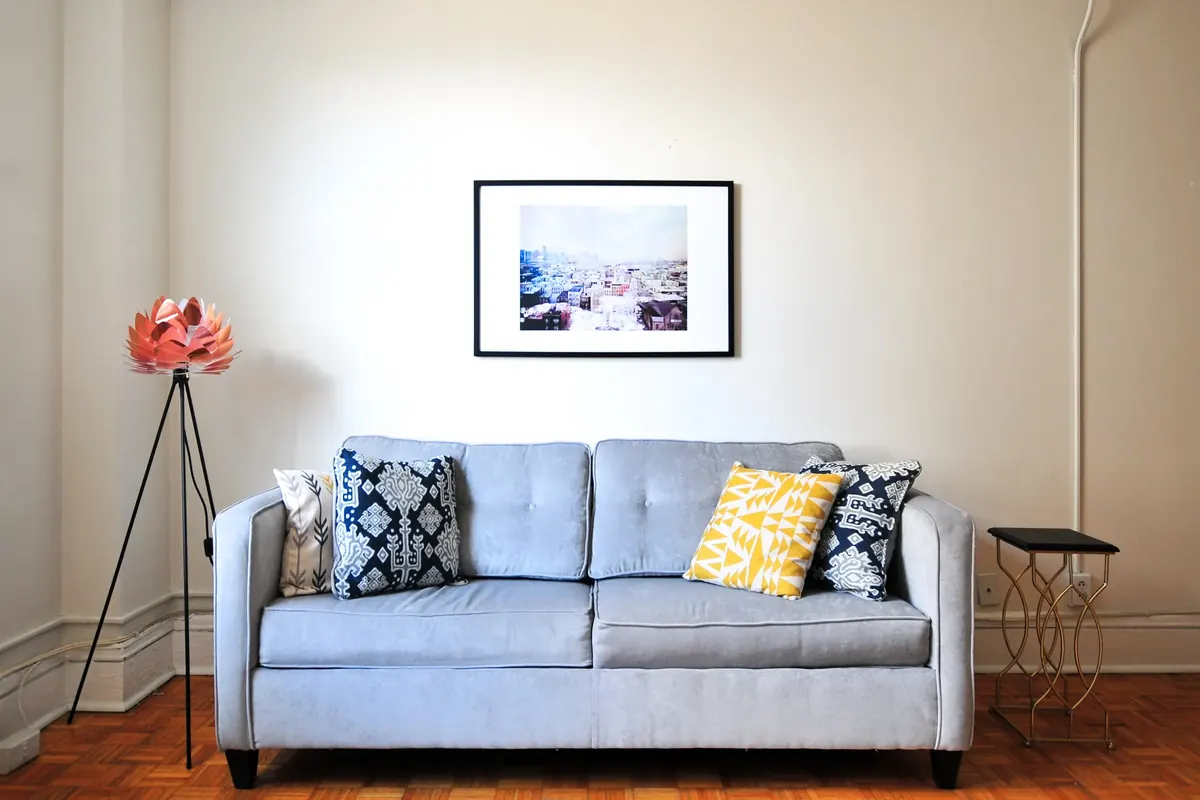
A first home, bought or rented, usually starts with more empty floor than furniture and less money than you hoped. That is fine. The choices that matter most are made before you sign anything: what you can really afford, which street you live on, and what state the place is in. Furniture and decoration can come slowly, much of it secondhand. This guide follows that order.
Step 1: a budget you can live with
Start with what you take home each month after tax, not with the price of the places you like. Then write down every regular cost you already have, and the new ones a home brings.
- Housing itself: rent, or the mortgage payment plus property tax, insurance and any service or association fees.
- Utilities: heating, electricity, water, internet. Ask the landlord, the seller or the utility what a typical year has cost in that home; older, draughty homes can cost much more to heat.
- Getting there: commuting by car or public transport. A cheaper home far from work can cost more overall.
- Upkeep: owners pay for every repair; renters often pay for small things and for anything they damage.
- A cushion: an emergency fund that stays untouched, because something always breaks in the first year.
Moving in has its own one-off costs: a deposit, the first month's rent or, for buyers, the down payment and closing costs, plus the move itself and basic kit such as a bed, a few pans and cleaning supplies. Add them up before you commit, not afterwards.
If you are buying in the United States, the Consumer Financial Protection Bureau's Buying a House pages explain each step, from comparing loan offers to reading the Loan Estimate that lenders must give you within three business days of an application. HUD-approved housing counselling agencies offer advice for first-time buyers, often free or at low cost. In England, the government's How to rent guide sets out what tenants should check and what landlords must provide.
Step 2: choose the neighbourhood before the home
You can repaint a kitchen. You cannot move a home away from a noisy road, a long commute or a street where you do not feel at ease. Look at the area first, at different times.
Before you sign, compare several homes and the neighbourhoods around them side by side, using the same list of questions for each.
- Visit twice: once on a weekday evening and once at the weekend. Listen for traffic, bars, trains and building sites.
- Walk the everyday routes: to the nearest food shop, pharmacy, bus stop or station, and, if it matters to you, a park, a school or a laundrette.
- Look at the street: are the neighbouring buildings looked after? Are there many "to let" or "for sale" signs, and do they stay up for months?
- Check local information: your city or county usually publishes flood maps, planned roadworks and planning applications. A big development next door can change the street for years.
- Ask people: a neighbour putting out the bins, or the person at the corner shop, will often tell you more than a listing.
Step 3: inspect the home itself
Most first homes are older and modest, which is no problem if you know what you are buying into. Take a torch, a phone charger (to test sockets) and this list.
Checklist
- Damp and mould: stains on ceilings, a musty smell, peeling paint around windows, black spots in corners and behind furniture.
- Water: run every tap and the shower together, flush the toilet, and look under the sink for drips.
- Heating and hot water: ask how old the boiler or furnace is and when it was last serviced.
- Windows and doors: do they open, close and lock? Is there a draught you can feel?
- Electrics: try the sockets and light switches; scorch marks, loose sockets or a fuse box that looks decades old are worth asking about.
- Pests: droppings in cupboards, and signs of bed bugs around beds and sofas left in furnished rentals.
- Storage and space: will a bed, a table and a sofa actually fit, and get up the stairs?
Buyers should pay for a professional home inspection, and read the report before the deal is final rather than after. In the United States, sellers and landlords of most housing built before 1978 must disclose any known lead-based paint and give you the federal lead pamphlet; buyers are normally given a period to arrange a lead inspection. If you plan to sand or strip old paint, treat it as possibly containing lead.
Radon is the other hidden one. It is a natural radioactive gas that can build up indoors, and the U.S. Environmental Protection Agency describes it as the leading cause of lung cancer among non-smokers. Tests are cheap and simple; the EPA's radon pages explain how to test and when to fix a home.
Step 4: safety before style
Spend the first money on the things that protect you. None of them is expensive.
- Smoke alarms. The U.S. Fire Administration advises alarms inside and outside each sleeping area and on every level, tested monthly, and replaced ten years from the date of manufacture printed on the back.
- Carbon monoxide alarm near sleeping areas if the home has gas, oil or wood heating, a gas cooker or an attached garage.
- Anchor tall furniture and the TV. Bookcases, chests of drawers and televisions can tip over; anchoring them to the wall with a kit is the advice of the U.S. Consumer Product Safety Commission's Anchor It campaign, and it matters most where small children visit.
- Know where things are: the main water stop valve, the electrical panel or fuse box, and the gas shut-off. Find them on day one, not during a leak.
- Change the locks when you buy, or ask a landlord whether they were changed after the last tenant.
Step 5: low-cost repairs that make a difference
A few cheap jobs make a modest home warmer, quieter and nicer to live in. Renters should check the lease first and ask the landlord before anything that is not easily undone.
Draughts
Air leaks around windows and doors waste heat. The usual rule from energy-efficiency guidance is caulk for gaps between parts that do not move, such as a window frame and the wall, and weatherstripping for parts that do, such as the edges of a door or an opening window. A door draught excluder costs little and is fully removable.
Walls and paint
Filling small holes, cleaning walls and repainting in a pale, washable finish changes a room more than almost anything else. Many landlords allow painting with permission, sometimes on condition that you repaint in a neutral colour before you leave.
Small fixes
- A dripping tap is often just a worn washer or cartridge.
- A running toilet is usually the flapper or fill valve, sold as inexpensive kits.
- Sticking doors can often be fixed by tightening hinge screws.
- Silicone around a bath or shower that has gone black can be cut out and replaced in an afternoon.
Leave gas, mains electrics and anything structural to qualified people. In a rental, those are usually the landlord's responsibility anyway; report them in writing and keep a copy.
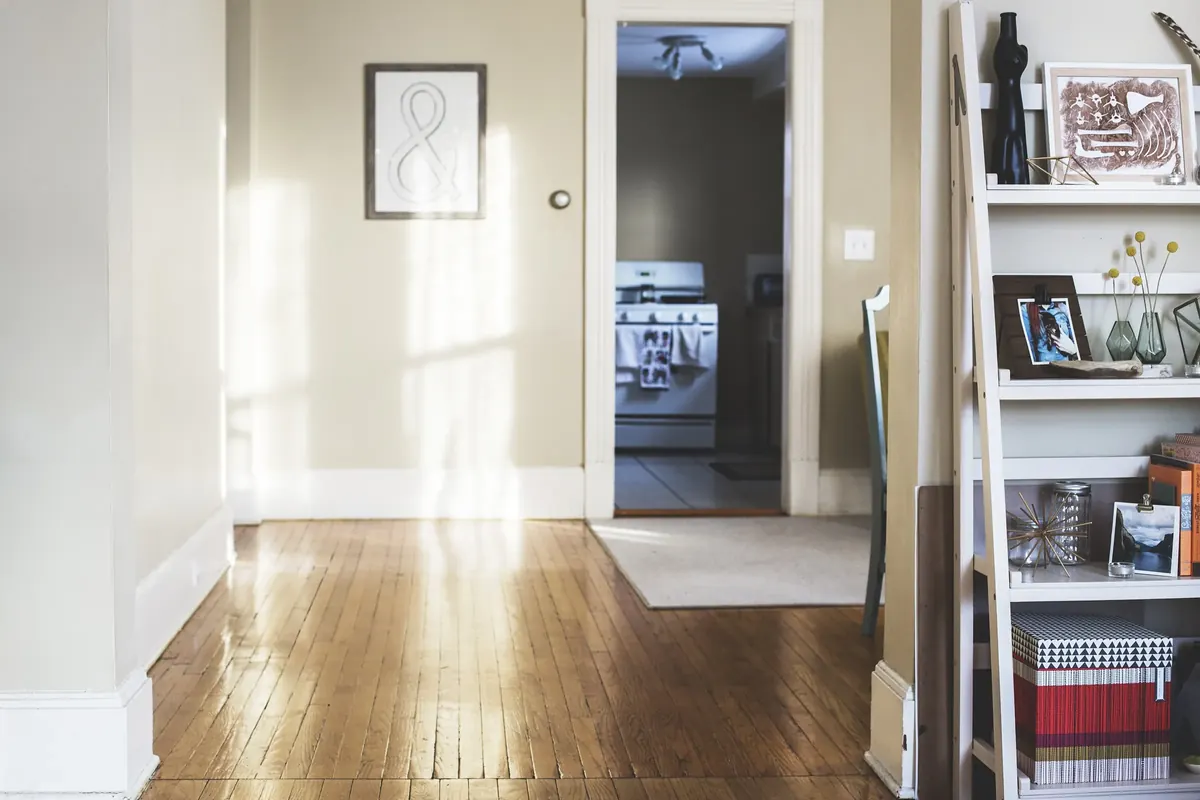
Step 6: furnishing slowly, and secondhand
You do not need a furnished home on the first night. You need somewhere to sleep, somewhere to sit, a table and a way to cook. Live in the space for a few weeks, notice where you actually sit, eat and drop your bag, and buy for that.
- Buy the bed new if you can. A mattress is the one piece most people prefer not to buy used. Bed frames, on the other hand, are easy to find secondhand.
- Solid wood over flat-pack. Older tables, chairs and chests of drawers are often sturdier than new budget furniture and cost less; see how to check secondhand furniture before you buy.
- Ask around. Friends and relatives often have a spare chair, lamp or set of plates, and community "free" groups give away furniture every week.
- Be careful with upholstery. The U.S. EPA advises checking secondhand beds and sofas for bed bugs before bringing them home; look along seams and under cushions with a torch.
- Measure first. Doorways, stairs and lifts decide what you can get in.
Once the basics are in place, a few textiles, lamps and handmade pieces do the rest. The approach in a calm bedroom on a small budget (edit, set a colour plan, layer) works for every room.
Step 7: a spending order
When money is short, spend in this order, because each step matters more than the one after it:
- The deposit or down payment, moving costs and an emergency cushion.
- Safety: alarms, furniture anchors, locks.
- A good night's sleep: a mattress and bedding.
- Warmth: draught-proofing, curtains, a rug on cold floors.
- Somewhere to sit and eat, mostly secondhand.
- Light: a lamp or two with warm bulbs.
- Everything else, slowly.
Records worth keeping
On moving day, photograph every room, including marks, stains and anything broken, and save the pictures with the date. For renters this is the best protection when the deposit is returned; in England, a deposit on most assured shorthold tenancies must be placed in a government-approved protection scheme. Keep receipts for repairs and for anything you buy for the home, and a simple folder with the lease or purchase papers, inspection reports and appliance manuals.
Sources
- Consumer Financial Protection Bureau, Buying a House and Loan Estimate explainer, consumerfinance.gov.
- U.S. Department of Housing and Urban Development, Housing counseling, hud.gov.
- U.S. Environmental Protection Agency, Real Estate Disclosures about Potential Lead Hazards, and Protect Your Family from Sources of Lead, epa.gov.
- U.S. Environmental Protection Agency, Radon, epa.gov.
- U.S. Environmental Protection Agency, Protecting Your Home from Bed Bugs, epa.gov.
- U.S. Fire Administration (FEMA), Smoke alarms, usfa.fema.gov.
- U.S. Consumer Product Safety Commission, Anchor It! campaign, anchorit.gov.
- ENERGY STAR (U.S. EPA), Seal and Insulate, energystar.gov.
- UK Government, How to rent: the checklist for renting in England, and Tenancy deposit protection, gov.uk.
 Home & handmade
Checking secondhand furniture
Solid wood or veneer, joints and drawers, woodworm, bed bugs, old paint and the pieces best bought new.
 Home & handmade
A calm bedroom on a small budget
Edit, set a colour plan, layer textiles and shop secondhand.
 Home & handmade
Macramé for beginners
Cord, four basic knots and a first plant hanger.