Secondhand wool and cashmere sweaters: what to check before you buy
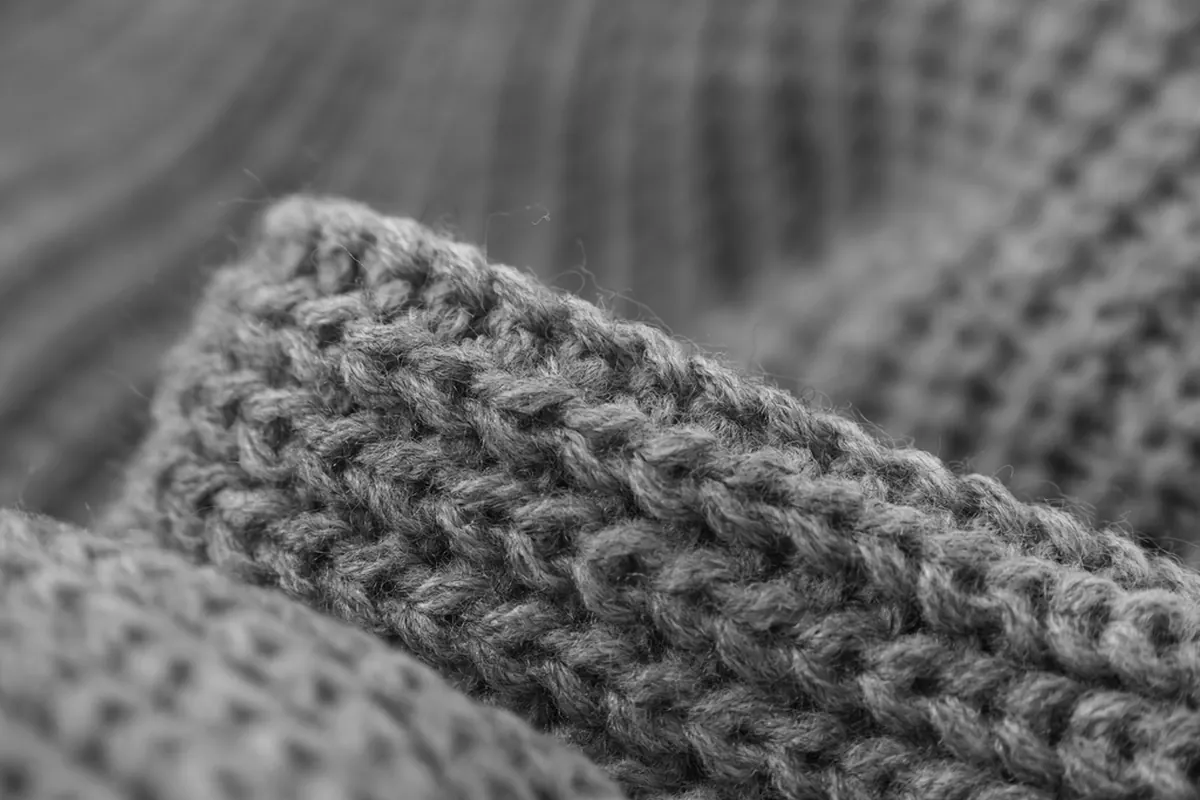
Autumn is when the knitwear rail at the thrift shop fills up, and it is one of the best places in secondhand clothing to find real value: a wool or cashmere sweater that would cost a lot new, for the price of a coffee. It is also where the disappointments hide, in a moth hole under the arm or a sweater that went through a hot wash and never recovered. Ten minutes of checking at the rack sorts one from the other.
Start with the label
In the United States, wool garments are covered by the Wool Products Labeling Act, and the label is more informative than it looks. Under the Act, a wool product has to show its fibre content as percentages by weight: wool, recycled wool, and every other fibre that makes up 5 percent or more. It also has to name the maker or the business responsible (by name or by a registered number) and the country where it was made. You can read the requirements in the text of the law, 15 U.S.C. § 68b.
Two definitions in the law are worth knowing:
- "Wool" means fibre from the fleece of sheep or lambs, or hair of the Angora or Cashmere goat, that has never been reclaimed from a woven or felted product.
- "Recycled wool" means fibre recovered from wool that had already been made into fabric and then broken back down into fibre. It is not a defect, and recycled-wool knits can be warm and hard-wearing, but the fibres are usually shorter, so they tend to pill more.
The law also gives "cashmere" a precise meaning: the fine, dehaired undercoat of the cashmere goat, with an average fibre diameter of no more than 19 microns and no more than 3 percent (by weight) of fibres coarser than 30 microns. A label that says 100% cashmere is therefore a specific legal claim, not a description of how soft something feels.
Read the whole label. "Cashmere blend" can mean a small share of cashmere with mostly wool or nylon, and the percentages tell you which. A sweater that feels like wool but is labelled acrylic is acrylic, whatever the hand says.
The other fibre names
| On the label | What it is | What to expect |
|---|---|---|
| Merino | Wool from the Merino breed of sheep | Fine and soft; often used for thin, close-fitting knits |
| Lambswool | Wool sold as coming from young sheep | Soft and springy; classic for crew necks and V-necks |
| Shetland | Traditionally wool from Shetland sheep; also used loosely for a style of knit | Slightly hairy, warm, durable; softens with wear |
| Mohair | Hair of the Angora goat | Fluffy halo, lustrous, often blended |
| Angora | Hair of the Angora rabbit (not the goat) | Very soft and fuzzy; sheds, and is usually blended |
| Alpaca | Fibre from the alpaca | Warm and soft; can feel heavier than wool |
The Angora name catches people out: the Angora goat gives mohair, and angora itself comes from a rabbit.
No label? Use your hands and eyes
Handknits, homemade pieces and older sweaters often have no label, or one cut out because it itched. Without one you are guessing, so pay accordingly. A few clues help:
- Feel and bounce. Wool springs back when you squeeze a handful and let go. Many acrylics feel slick or squeaky and stay crushed.
- Warmth. Hold the knit against your wrist for a few seconds. Wool tends to feel warm quickly; acrylic and cotton feel cooler.
- Pills. Acrylic pills are often hard, glossy little balls that cling; wool pills are softer and brush off more easily.
Some people do a burn test at home on a few fibres taken from a seam allowance: wool smoulders, smells of burnt hair and leaves a crumbly ash, while acrylic melts into a hard bead. Do it over a sink, with a few fibres only, never on the garment and never in the shop.
Check for holes and moth damage
Clothes moth larvae eat wool, cashmere and other animal fibres, and the damage hides where people do not look. The University of California's integrated pest management programme notes that it often sits under collars and cuffs, and that stained fabric is more vulnerable (UC IPM, Clothes Moths). So:
- Hold the sweater up to a window or a light. Small holes and thin, grazed patches show up as points of light.
- Turn back the collar and cuffs, and look under the arms and along the hem.
- Look for signs of larvae: silky tubes or mats with fibres stuck in them, or small cigar-shaped cases open at both ends.
- Check stains, especially food marks on the front. They attract larvae later, too.
One or two small holes are not a reason to walk away if the price reflects them and you are willing to darn. Visible mending can even be the best thing about the sweater; see wear your heart on your sleeve for patches and darns. A sweater with a scatter of holes all over has had a long moth problem, and there will be more you have not found.
Pilling, felting and stretch
- Pilling is normal on wool and cashmere, mostly where the knit rubs: under the arms, on the sides and on the cuffs. It is cosmetic and comes off with a sweater comb or a fabric shaver. Heavy pilling on a nearly new-looking sweater suggests short fibres, which will keep pilling.
- Felting is the real deal-breaker. A sweater washed hot or tumble-dried feels stiff and dense, the stitches blur together, and it is often smaller than its size label. It cannot really be undone. (Felted sweaters are good material for mittens and crafts, if that appeals.)
- Stretch. Ribbed cuffs and hems that hang open and do not spring back are tired. Elbows that bag, and shoulders stretched from a hanger, rarely recover fully.
- Seams and joins. On many good knits the pieces are joined with fine linked seams. Check for open seams and dropped stitches; a short split seam is an easy fix, a run of dropped stitches less so.
Size and fit
Ignore the size on the label and measure. Lay a sweater you like flat at home, measure across the chest from armpit to armpit and the sleeve from shoulder seam to cuff, and keep the numbers on your phone. Knitwear has often shrunk a little in the wash, and vintage sizes run differently from today's (our guide to buying vintage clothes covers sizing in more detail). Try it on if you can, and raise your arms: a sweater that rides up at the wrists will annoy you every day.
Is it worth the price?
A good secondhand knit is one of the better places to put clothing money: a well-made wool sweater can last for many winters with basic care. Our piece on where clothing money goes furthest has more on that trade-off. Pay more for a clean, unholed sweater with a clear fibre label, a dense, even knit and firm ribbing. Pay little, or pass, for an unlabelled piece, a stained one, or one with several holes.
Once it is home
Keep any new knit away from your own wardrobe until it has been dealt with, because a single sweater can bring moth eggs with it. Freeze it or wash it first, following the routine in cleaning and mending secondhand clothes; wool and cashmere need cool water and no wringing. The same UC IPM guidance says clean, pest-free woollens should be stored in airtight containers, that the protection given by cedar is debatable (a tight chest matters more than the wood), and that pheromone traps, which catch male moths, help detect a problem and reduce numbers but do not clean clothes that are already infested.
Dry knits flat, fold rather than hang them, and give them a brush and an airing now and then through the season. Moths prefer what is left undisturbed.
Checklist
At the knitwear rail
- Read the fibre percentages, not just the first word
- Hold it up to the light for holes
- Collar, cuffs, underarms, hem
- Silky tubes or tiny cases: put it back
- Stiff and dense: felted
- Ribbing springs back
- Measure, do not trust the size
- Bag it separately on the way home
 Thrift & vintage
Cleaning and mending thrift finds
Washing by fabric, smells, moths, buttons, seams and hems.
 Thrift & vintage
How to buy vintage clothes
Where to look, vintage sizing, what to inspect, label clues.
 Home & handmade
Checking secondhand furniture
Solid wood or veneer, joints and drawers, woodworm, bed bugs, old paint and the pieces best bought new.