How to choose hiking boots (that you will actually want to wear)
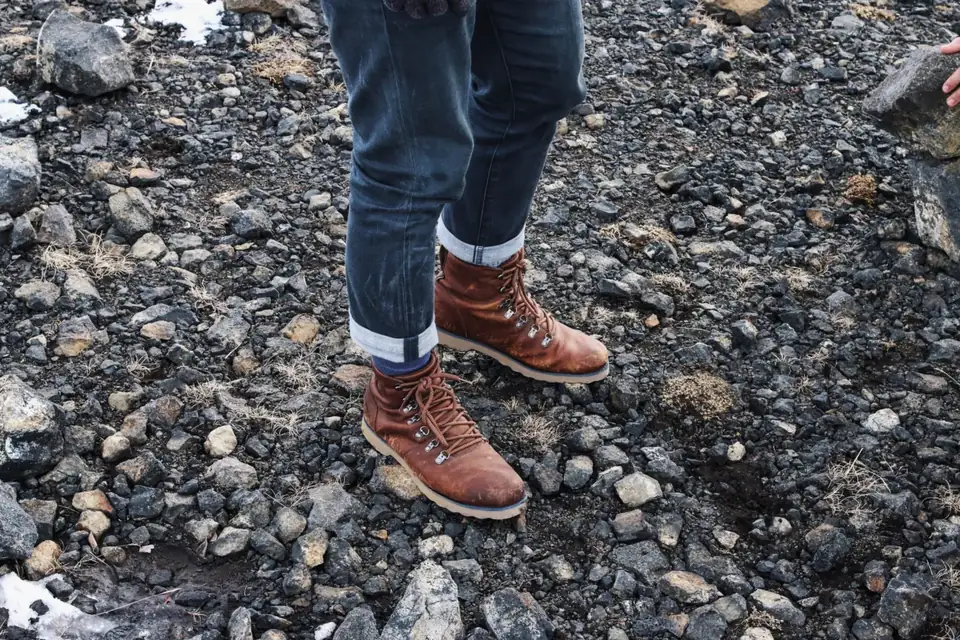
The best hiking footwear is the pair you forget about on the trail. Looks matter, and there is no reason good boots cannot look good, but fit and the right type for your hikes matter far more. This guide walks through the choice step by step.
Start with the hikes, not the boots
Before you look at anything, answer three questions honestly:
- How far and how rough? Smooth, well-kept paths of a few kilometres need much less shoe than rocky, steep or off-trail routes.
- How much weight on your back? A day pack with water and a jacket is very different from a multi-day pack with a tent and food.
- What weather and ground? Dry dusty trails, wet meadows, snow patches and stream crossings each favour different materials.
Most beginners do day hikes on established trails, and for that a light, comfortable shoe or mid boot is usually enough. Buy for the hiking you do now, not the expedition you might do one day.
The main types
| Type | What it is | Best for | Trade-offs |
|---|---|---|---|
| Trail running shoes | Light, flexible, grippy running shoes for dirt | Fast day hikes, dry trails, people who like a light feel | Less protection underfoot and around the ankle; wear faster |
| Hiking shoes (low-cut) | Sturdier than trail runners, with a firmer sole and toe protection | Most day hikes on maintained trails | Water and debris come in over the top |
| Mid-height hiking boots | Cover the ankle bone; moderate stiffness | Rocky or muddy trails, light overnight trips, people who want more support and protection | Heavier and warmer; may need more breaking in |
| Backpacking boots | High, stiff, supportive, often leather | Heavy loads, rough terrain, long trips | Heaviest; overkill for easy day hikes |
A higher cuff protects the ankle from knocks and keeps out debris. Whether it prevents sprains is debated; what clearly helps is a good fit around the heel and a sole that grips.
Materials and waterproofing
Uppers
- Synthetic and mesh uppers are light, dry quickly and usually need little breaking in. They tend to show wear sooner.
- Suede and nubuck leather, often combined with fabric, are a middle ground: durable but not too heavy.
- Full-grain leather is tough, supportive and water resistant, lasts a long time with care and can often be resoled. It is heavier and needs a real break-in period.
Waterproof or not?
Many boots have a waterproof, breathable membrane inside. It keeps feet dry in wet grass, puddles and light rain. The downside is that it reduces breathability, so feet can get hot and sweaty in summer, and once water gets in over the top it takes longer to dry out. A simple rule: choose waterproof for cool, wet climates and shoulder seasons; consider non-waterproof, quick-drying shoes for hot, dry hiking or for trips with many stream crossings where your feet will get wet anyway.
Soles
Look for deep, well-spaced lugs for mud and loose ground, and a distinct heel edge that helps on descents. A stiffer midsole protects feet on rocks and under a heavy pack; a flexible one feels more natural on easy trails.
Getting the fit right
Fit is where most mistakes happen. Take your time, and if possible buy from a shop where staff can measure your feet and let you walk around.
- Shop later in the day. Feet swell a little over the day and on long walks; trying shoes on in the afternoon gives a more realistic fit.
- Bring your hiking socks, and any insoles or orthotics you use. A boot that fits with thin cotton socks may be tight with cushioned wool ones.
- Measure both feet. Many people have one foot slightly bigger; fit the bigger one.
- Check the length. Unlaced, slide your foot forward until the toes touch the front; there should be room behind the heel, roughly a finger's width. Laced up, your toes should not touch the front when you stand or walk downhill.
- Check the heel. Laced snugly, your heel should stay put with little lift as you walk. A heel that slides up and down causes blisters.
- Check the width. The widest part of your foot should sit at the widest part of the shoe, without pressing on the sides. Many models come in wide versions.
- Walk on a slope. Use the shop's ramp, or stairs. On the downhill your toes should not jam into the front.
- Wear them at home on clean floors for an evening before you take them outside, so you can still return them if something rubs.
Try several brands: their shoe shapes (lasts) differ, and one brand's "size 8" may not match another's. The outdoor cooperative REI publishes a detailed guide to choosing hiking boots that goes deeper into fit and features.
Socks and lacing
- Wear wool or synthetic hiking socks. Cotton holds sweat against the skin, which encourages blisters.
- Lace firmly over the instep so the foot does not slide forward on descents, but not so tight that the top of the foot goes numb.
- If your heel lifts, try a "heel lock" (also called a runner's loop): use the top eyelets to make a loop on each side and pass the opposite lace through it before tying. It holds the heel back without over-tightening the front.
- If your toes get squeezed, skip lacing the lowest eyelets or loosen them before tightening the upper part.
Breaking them in
Light synthetic shoes often feel right from the first day; stiff leather boots may need a few weeks. Either way, do not take new footwear on a long hike. Wear them around town, then on short walks, then on a short hike with your pack. Any hot spot that appears is a warning: adjust lacing, try different socks, or return the shoes if they are still unworn indoors.
On the trail, stop and deal with a hot spot as soon as you feel it. A piece of tape or a blister plaster on a hot spot prevents a blister; dealing with a blister afterwards is much harder.
Looking after them
- Knock off mud and rinse with clean water after muddy hikes; a soft brush helps.
- Dry them at room temperature with the insoles out and newspaper inside, not next to a fire or heater, which can damage glue and leather.
- Treat leather with a conditioner or waterproofing product suitable for that leather, following the boot maker's advice.
- Replace the shoes or have them resoled when the lugs are worn smooth: worn soles lose grip on exactly the wet rock where you need it.
Buying secondhand
Used boots can be a bargain, especially barely worn ones that someone bought in the wrong size. Check:
- The soles: plenty of lug depth, no separation between sole and upper.
- The inside: no collapsed padding at the heel, no holes in the lining, no strong smell.
- The shape: worn boots mould to their owner's feet. Try them on with your socks and walk around; if they push your foot into an odd position, pass.
Thrift stores, outdoor gear swaps and the used-gear sections some outdoor retailers run are good places to look. For general tips on secondhand shopping, see the guide to buying vintage and secondhand clothes.
And the "cute" part
Hiking footwear now comes in many colours and styles, from classic brown leather to bright synthetics. Once you have narrowed the choice to a few pairs that fit well and suit your hikes, choosing the one you like the look of is a perfectly good tiebreaker. You will wear the pair you love more often, and that is how boots get broken in.
 Trails & campsites
Family camping for beginners
Campground, gear, sleeping warm, food, and keeping kids happy.
 Trails & campsites
Packing light for a long weekend
One carry-on, a small wardrobe, liquids rules and a checklist.
 Thrift & vintage
How to buy vintage clothes
Where to look, vintage sizing, what to inspect, label clues.