Cooking on a camp stove in freezing weather: which fuel keeps working, warm canisters and melting snow
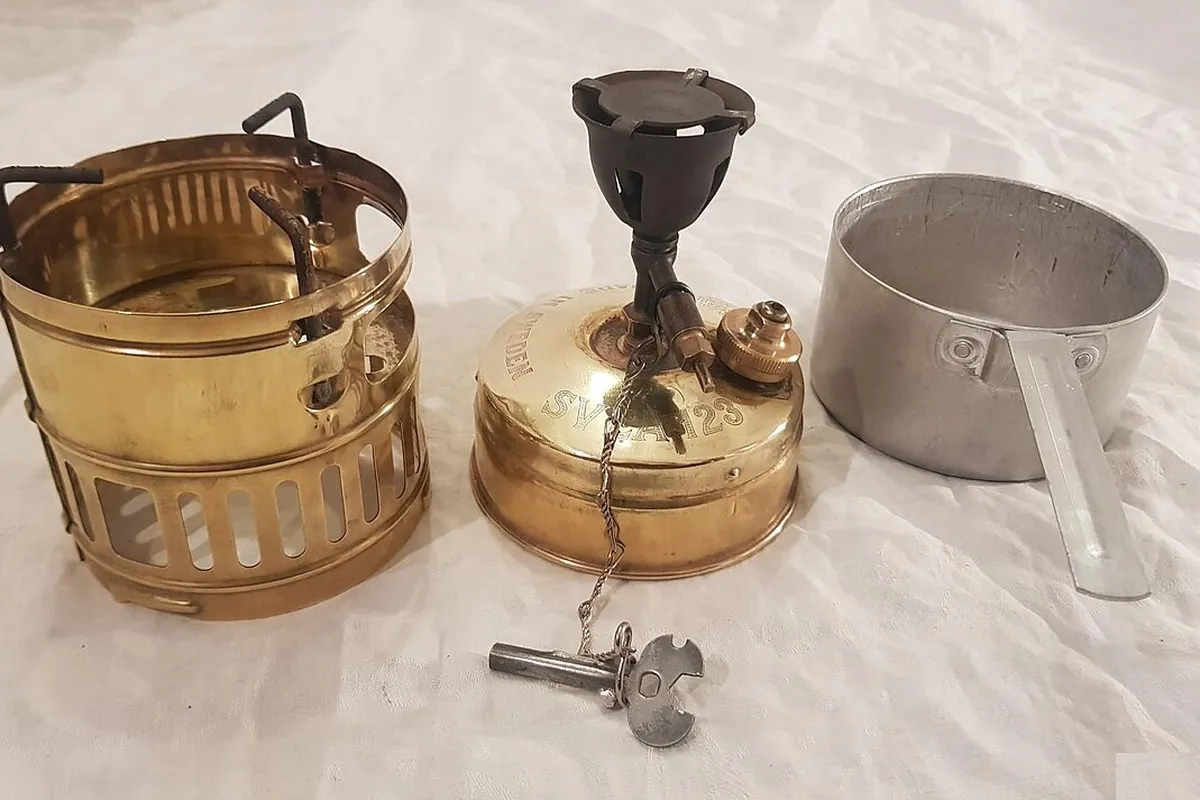
The first frosty morning of a camping trip has a particular sound: the click of the igniter, a weak blue flame, a hiss that fades to nothing, and someone muttering that the stove worked fine last night. Nothing is broken. A gas stove depends on fuel turning from liquid to vapour, and cold slows that down. Once you understand why, a stove that keeps going through a cold breakfast is mostly a matter of where you sleep the canister, which fuel you bought, and a few habits worth learning before the trip rather than at dawn.
Why a gas canister fades in the cold
The screw-on canisters sold for backpacking stoves hold liquefied gas under pressure. The stove burns the vapour that boils off the liquid, and how much vapour you get depends on how far above its boiling point the fuel sits. Each gas boils at a very different temperature. According to the US National Institute of Standards and Technology, normal butane boils at about 273 kelvin, roughly 0 °C or 32 °F; isobutane at about 262 kelvin, roughly −11 °C or 12 °F; and propane at about 231 kelvin, roughly −42 °C or −44 °F.
That explains most of what happens at camp:
- Cheap butane canisters, like the tall ones made for tabletop stoves, struggle as soon as the canister itself gets near freezing.
- Backpacking blends mix isobutane with some propane, so they keep working several degrees colder.
- A running stove chills its own fuel. Turning liquid into vapour takes heat, which comes out of the canister. On a long boil you may see frost forming on the outside, and the flame dropping with it.
- A half-empty canister is weaker in the cold than a full one. The propane in a blend tends to boil off first, so what is left late in a canister's life is richer in the gases that give up earliest.
Keeping a canister warm, safely
The simplest fix is also the oldest: do not let the canister get cold in the first place.
- Sleep with the morning's canister in the foot of your sleeping bag, or carry it in an inside jacket pocket for the last hour before you cook.
- Stand the stove on a square of closed-cell foam or a thin board rather than on snow or frozen ground, which pull heat out fast.
- Keep a spare canister warm in a pocket and swap it in when the first one fades; warm it up again and it will usually give more.
- Shelter the flame from wind, but follow the earlier rule from our campfire and camp stove safety checklist: do not wrap a canister inside a windscreen unless the stove maker says it is designed for that.
Some makers allow standing the canister in a shallow dish of lukewarm water. Never warm a canister over a flame, beside the burner, on a hot rock or against a heater: a pressurised container that gets too hot can fail violently. If the instructions do not mention warming, do not improvise.
Remote and liquid-feed stoves
Stoves that sit directly on top of the canister are light and simple, but they keep the burner's heat away from the fuel and can only draw vapour. Stoves with a hose between canister and burner add stability on uneven ground and, on models designed for it, allow the canister to be turned upside down. The stove then draws liquid fuel and vaporises it in a heated tube near the flame, so it keeps working at temperatures where an upright canister gives up. Only do this with a stove whose instructions explicitly allow it: on any other stove, liquid fuel arriving at the burner can produce a tall, uncontrolled flare.
When a liquid-fuel stove is worth it
For regular camping below freezing, many winter campers use stoves that burn white gas (refined naphtha) from a refillable bottle. You pump air into the bottle, warm the burner with a small priming flame, and the stove then vaporises its own fuel, which makes it far less sensitive to cold than a gas canister. The old brass stoves like the one in the photo work on the same principle, with the warmth of the burner itself keeping the tank pressurised.
The trade-offs are real: priming takes practice, a flare-up while priming is normal and should happen well away from the tent and anything flammable, and the stove needs occasional cleaning. Fuel spilled on bare skin in deep cold can also cause frostbite in seconds, because it evaporates so fast; wear thin gloves when refilling. The US National Weather Service cold safety pages explain the warning signs of frostbite and hypothermia, which are worth knowing before any winter trip.
Melting snow without scorching the pot
In snowy country, the stove is also your water supply, and melting snow uses far more fuel than heating water. A few habits help:
- Start with a little liquid water in the pot, even a few spoonfuls. Snow on its own over a flame can scorch the bottom and give the water a burnt taste; once there is some water, the snow melts into it.
- Add snow a little at a time and keep the lid on between additions.
- Collect clean snow away from paths, campsites and animal tracks, and keep a separate bag or bottle for it.
- Treat the result like any other outdoor water. Snow is not automatically clean. Bringing it to a rolling boil deals with germs; our guide to safe drinking water on a hike or at camp covers boiling and the alternatives.
Plan on more fuel than in summer for the same meals, and carry a lighter and a few matches in an inside pocket: some built-in igniters become unreliable in the cold, and a lighter that has been in a cold pack can refuse to strike until it warms up.
Never bring the stove inside the tent
Cold weather is exactly when the temptation is strongest: the vestibule is out of the wind, the tent is right there, and a flame seems like it would take the edge off. Every stove produces carbon monoxide, which has no smell and no colour, and a tent fills quickly. The US Centers for Disease Control and Prevention counts more than 400 Americans dying each year from unintentional carbon monoxide poisoning not linked to fires, with more than 14,000 hospitalised, and its advice is direct: "Never use a portable gas camp stove indoors." Cook in the open, downwind of the tent, and warm yourself with food, hot drinks and the right layers instead, as described in our guide to staying warm on a cold night in a tent.
What to do with empty canisters
Winter trips get through canisters quickly, and the empties are a nuisance. They are not ordinary recycling. In Somerset, in England, crews at two recycling plants avoided more than 1,000 potential fires caused by gas canisters, mostly small camping canisters put out with household recycling, and the council's advice is plain: "Gas canisters should not be put with kerbside recycling or rubbish collections." In British Columbia, the province's recycling manager told CBC News that canisters in blue boxes "create a fire risk and a potential worker safety issue".
Take empties to a household recycling centre and ask where they go, or follow the canister maker's instructions, which differ between brands. Some US national parks run machines that drain and crush one-pound propane bottles so they can be recycled as scrap, a scheme Outside magazine has described; it is worth asking at the visitor centre. Never put a canister in a fire, even an empty one.
Checklist
Cold-weather stove kit
- A backpacking canister with an isobutane-propane blend, not a cheap butane canister, or a liquid-fuel stove for regular sub-freezing trips
- A spare canister, carried warm
- A square of closed-cell foam or a thin board to stand the stove on
- A windscreen used the way the stove maker allows
- A lighter and matches in an inside pocket
- A pot with a lid, and a little liquid water to start melting snow
- Thin gloves for handling fuel, and a bag to carry empty canisters home
Sources
- National Institute of Standards and Technology, NIST Chemistry WebBook: boiling points of butane, isobutane and propane.
- Centers for Disease Control and Prevention, Carbon monoxide poisoning basics (page updated 26 October 2026); Somerset Council, news release on gas canisters in recycling (updated 31 May 2024).
 Camp & seasonal kitchen
Campfire and camp stove safety
Stoves, fire rings, putting a fire out cold, and carbon monoxide.
 Trails & campsites
Warm on a cold night in a tent
The ground steals more heat than the air: pads first, then what a bag's comfort rating means, what to wear and how to warm up.
 Trails & campsites
Safe water on a hike or at camp
Boiling, filters, tablets and UV pens each leave a gap. What the labels mean, and a two-step routine that closes it.