Old Hollywood glamour from the thrift rack: lessons from the Elizabeth Taylor era
Few looks are as easy to recognise as mid-century screen glamour: a defined waist, rich fabric, dark winged eyeliner and jewellery that is meant to be seen. Elizabeth Taylor, whose career ran from child roles in the 1940s to the big productions of the 1960s, is one of the faces most often associated with it. You do not need a studio wardrobe to borrow the spirit. Much of it can be found secondhand, and the rest is technique.
What "Old Hollywood glamour" actually means
The phrase covers several decades, but when people use it they usually mean the late 1940s to the mid-1960s, and a handful of recurring ideas:
- A clear silhouette. Either a fitted bodice with a full skirt, or a close-fitting sheath that follows the body. Both mark the waist.
- Fabric that catches light: satin, silk faille, velvet, taffeta, fine wool crepe.
- Strong eyes and groomed brows, often with a winged liner and a defined lip.
- Polished hair: soft waves, a sleek bob or a full set style, sometimes with a fringe.
- Statement jewellery: a bold necklace, chandelier earrings, a cocktail ring, or a brooch worn with intent.
The epic film costumes of the early 1960s, with their heavy eye make-up, collars and headpieces, are the theatrical end of this spectrum. For everyday wear, it is better to borrow one element than to copy a whole costume.
Silhouettes to look for secondhand
The fit-and-flare dress
A fitted top, a nipped waist and a full or pleated skirt. Genuine 1950s examples often have a metal side zip, generous seam allowances and a hand-finished hem. Reproduction and later revival pieces are common too, and are often easier to wear because they use modern sizing and some stretch.
The sheath or wiggle dress
A slim dress that follows the body to the knee. It looks simple and is unforgiving of poor fit, so try it on sitting down as well as standing. A walking vent or kick pleat at the back makes it practical.
The tailored suit and the cocktail separates
A short fitted jacket with a pencil skirt, or a silk blouse with a full skirt, gives the same effect with pieces you can mix with the rest of your wardrobe.
Outerwear
A swing coat, a cropped bolero, or a wrap coat with a big collar adds instant drama over plain clothes. Coats are also among the most durable vintage finds, because they were made to last and were often well looked after.
Fabric and condition checks
Mid-century evening fabrics are beautiful and sometimes fragile. Before you buy, check:
- Underarms and waist seams for discolouration and weak stitching.
- Silk and satin held up to the light, looking for splits ("shattering") along the grain, which cannot be repaired.
- Velvet pile for bald or crushed patches.
- Zips and hooks, which are easy to replace but add a cost.
- Linings, which are often the first part to fail and can be replaced by a tailor.
Our guide to buying vintage and secondhand clothes covers sizing, labels and inspection in more detail, and cleaning and mending secondhand clothes explains how to wash or refresh delicate pieces safely.
The eyes: a wearable winged liner
A soft wing is the most recognisable single element of the look, and it costs almost nothing.
- Start with a thin line close to the upper lashes, from the middle of the lid outward.
- Look straight into a mirror and imagine a line continuing from the outer edge of your lower lashes toward the end of the brow. Draw a short flick along it.
- Connect the tip of the flick back to the line on the lid, and fill in.
- Keep it shorter than you think for daytime. The longer, heavier wing belongs to evenings.
Defined brows complete it: brushed up, with gaps lightly filled, rather than drawn on hard.
Hair
Period hairstyles took setting, rolling and time. Modern shortcuts give a similar effect:
- Soft waves: large rollers or a wide curling iron, then brushed out for volume.
- A sleek, glossy finish with a little smoothing product, for short or medium hair.
- A fringe, if you already have one, styled smooth and full.
- A scarf or a simple headband as an everyday nod to the headpieces of the era.
Jewellery: costume pieces are the point
Some stars of the period were famous for their real jewels, but costume jewellery of the 1950s and 1960s was designed to give the same impression for much less, and much of it was well made. At thrift shops, estate sales and vintage fairs, look for:
- Rhinestone necklaces and earrings with stones that are set (held by prongs), not only glued.
- Bib necklaces and multi-strand faux pearls.
- Large brooches, which can be worn on a lapel, a hat, a belt or a bag.
- Cocktail rings with a single large stone.
Check for missing stones, darkened foil behind the stones, green corrosion on clasps, and broken pin catches. Replacing a stone is a small job; replating a whole piece is not. Clip-on earrings are common in older pieces; they can be converted to pierced fittings, but this changes the piece, so only do it to something you plan to wear often.
Wearing it today without looking costumed
- One statement at a time. A full-skirted dress with plain flat shoes, or jeans and a white shirt with a bold necklace and a winged liner.
- Modern hair or make-up with a vintage dress, or the reverse.
- Keep the fit precise. Glamour depends on tailoring. A simple dress taken in at the waist by a tailor will look more polished than an expensive one that does not fit.
- Use texture instead of colour. A black velvet top or a satin skirt reads as glamorous in a way that bright colours often do not.
Bringing the mood home
The same principles work in a room: a few rich textures, one dramatic object, warm low lighting and a mirror to bounce it around. Our guide to a calm, personal bedroom on a small budget shows how to layer textiles and secondhand finds without overspending.
A simple shopping list
Checklist
- One fitted dress (fit-and-flare or sheath) in a dark, rich fabric
- One statement necklace or pair of earrings
- One brooch
- A black liquid or gel liner
- A silk scarf for hair or neck
- A tailor's visit for the dress
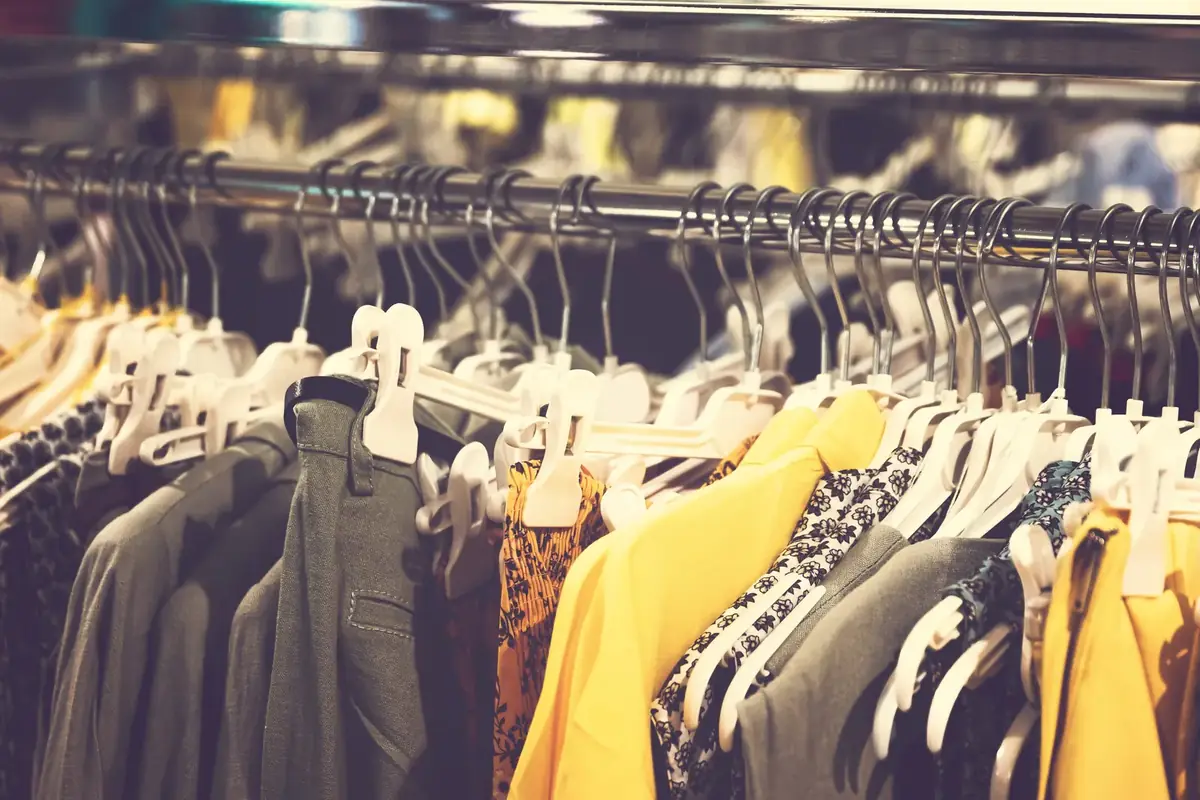 Thrift & vintage
How to buy vintage clothes
Where to look, vintage sizing, what to inspect, label clues.
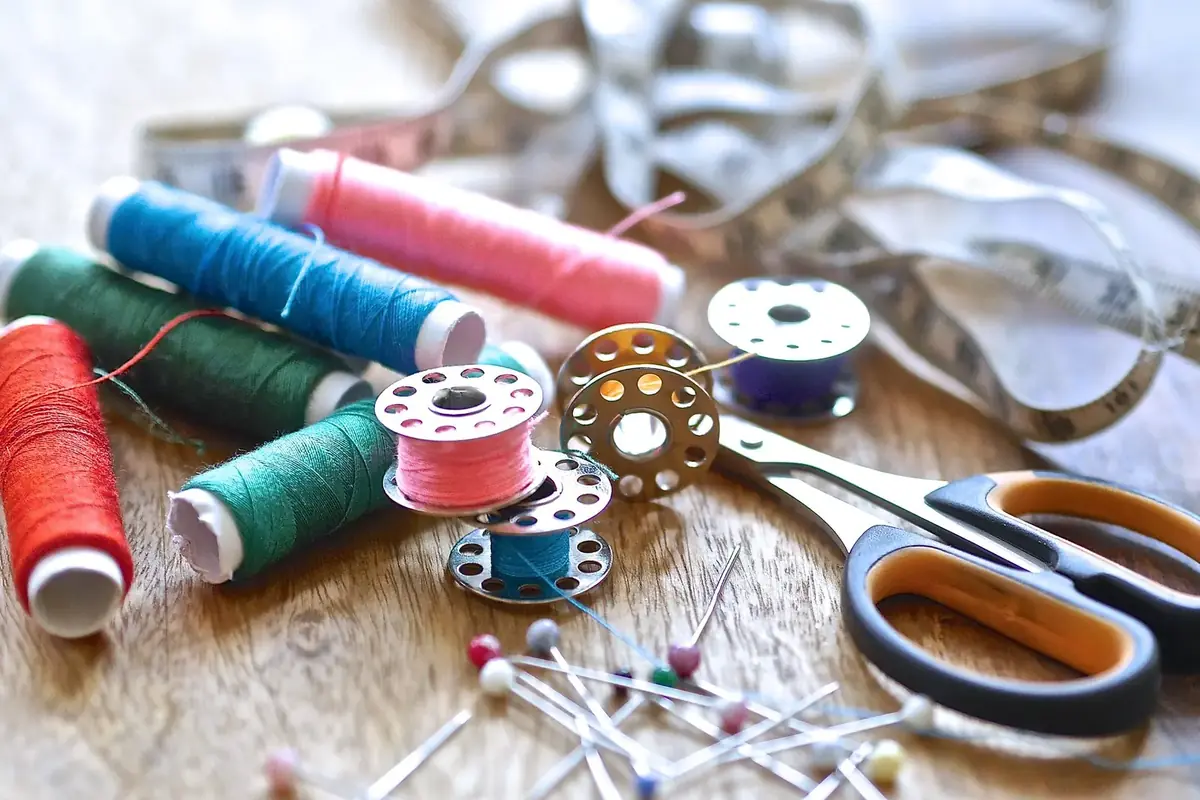 Thrift & vintage
Cleaning and mending thrift finds
Washing by fabric, smells, moths, buttons, seams and hems.
 Home & handmade
A calm bedroom on a small budget
Edit, set a colour plan, layer textiles and shop secondhand.